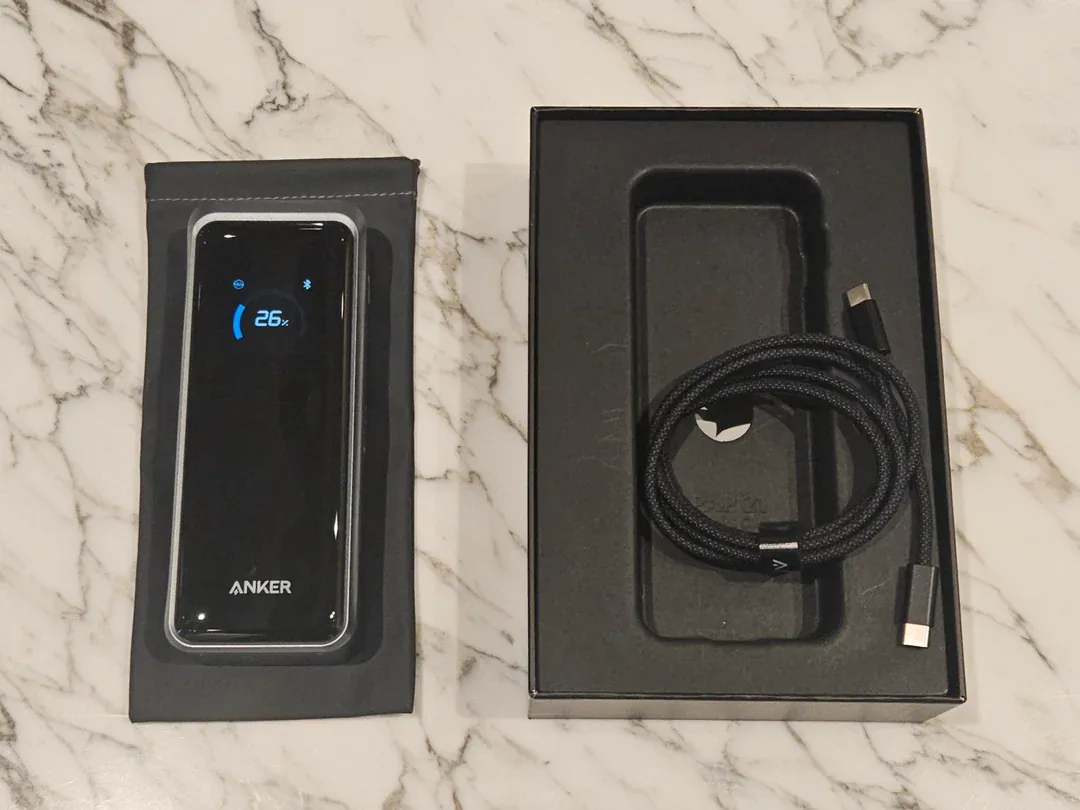
The most stressful time to discover a power bank is unsuitable for a flight is at airport security. Battery-capacity labels can be confusing because shops advertise milliamp-hours while airline rules often refer to watt-hours. If you fly regularly in India, choose a clearly labelled product from a seller who will stand behind the warranty, and check the airline's current requirements before leaving home.
Understand Wh, not only mAh
Airline battery limits are normally expressed in watt-hours (Wh). If the power bank only shows milliamp-hours (mAh), use the voltage printed on the product or its specification sheet to calculate watt-hours. A typical 20,000 mAh pack using a nominal 3.7 V cell is about 74 Wh.
Flight-safety checklist
- Carry spare lithium batteries and power banks in cabin baggage, not checked baggage, unless your airline explicitly says otherwise.
- Make sure the capacity marking is readable on the device.
- Protect exposed terminals and do not carry a swollen, damaged or recalled battery.
- Check the airline’s policy for batteries at or above 100 Wh; approval and quantity limits can apply.
- Do not assume that an “airline safe” marketing badge replaces the airline’s rules.
Charging features worth paying for
For modern phones and laptops, USB-C Power Delivery can be more useful than a very large capacity. Check the maximum input as well as output: a pack that can recharge itself quickly is easier to use on a trip. Also check whether the advertised maximum is per port or shared across all ports.
Safety and authenticity
Buy from a reputable seller, inspect the battery for damage, and stop using it if it becomes swollen, unusually hot or mechanically damaged. Avoid counterfeit packs with unrealistic capacity claims.
How this guide was researched
This guide is based on published aviation battery rules and product specifications. CSNR does not claim to have obtained airport approval for every model. Your airline’s current policy is the final practical check before travel.
Further reading and official sources
- IATA passenger baggage guidance for lithium batteries
- Check your airline’s official restricted-baggage page before travel.
What this means in practice
Keep the power bank in cabin baggage, protect its ports from loose metal objects and avoid carrying a swollen or damaged unit. Don't rely solely on a marketplace listing for capacity: read the information printed on the bank itself. If the label is unreadable, choosing a different unit is easier than arguing about it at the checkpoint.
Related CSNR guides
Have a correction or a source update? Contact the CSNR team.